Keeps the gap.
Leaves the brakes to the rider.
Adaptive cruise control for standing e-scooters. A camera and radar watch the road ahead. The system holds a safe distance by limiting the motor, caps speed at the legal 20 km/h, and warns the rider before a collision. It never brakes on its own.
The short version
e-scooter accidents with injuries in Germany in 2025, up 38.1 % in one year. 38 people died.
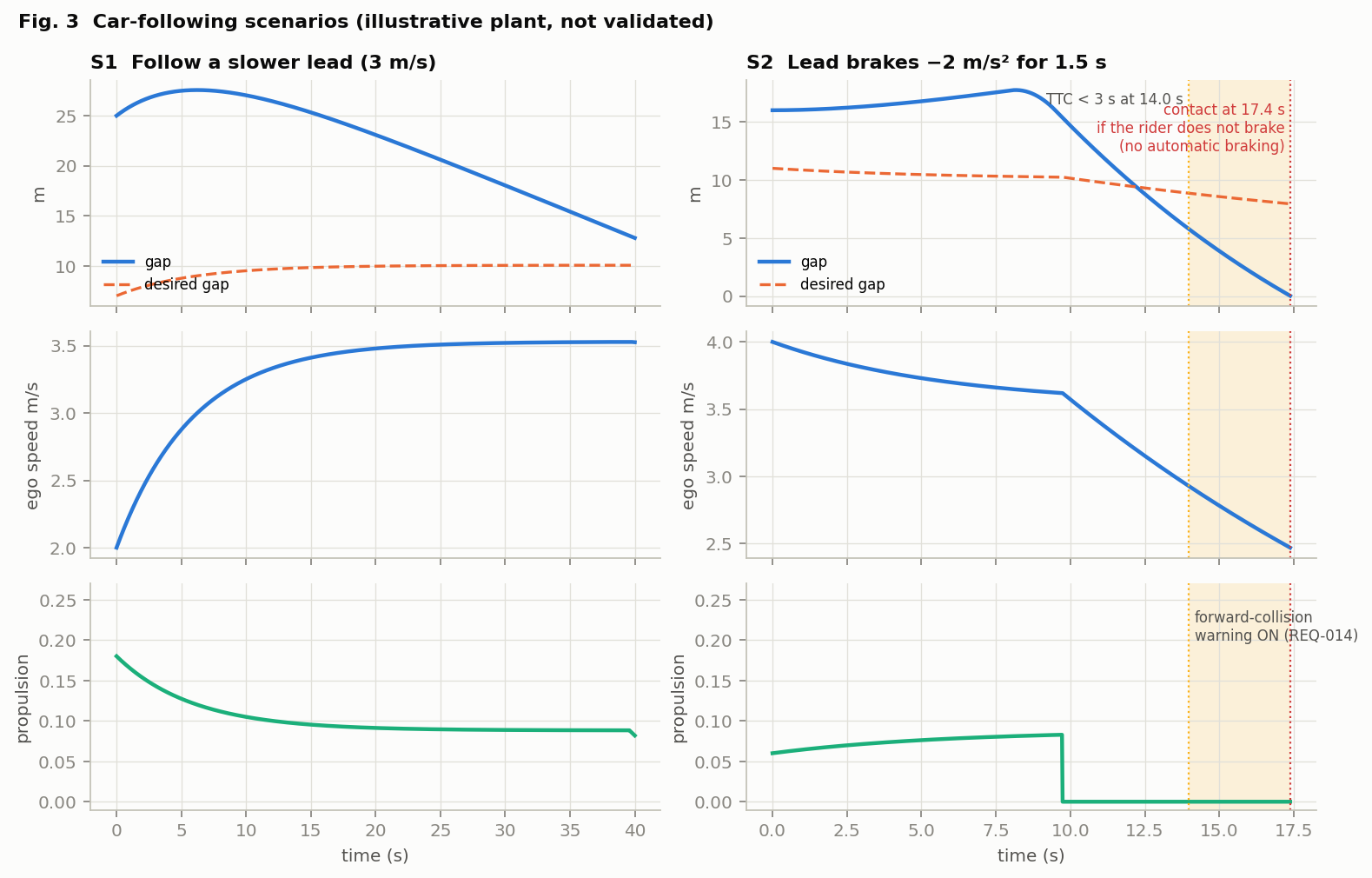
of warning before contact in our hard-braking scenario. The previous version gave none.
safety tests pass, run automatically on every change. The three safety gaps found earlier are fixed.
In the sources we reviewed, no product documents forward distance keeping on a standing kick scooter. Standing scooters offer cruise control and riding assistance, Chinese makers fit radar to two-wheelers for rear warnings, and researchers have tested forward safety filters. Our design adds forward distance keeping with the rider always in command, supervised by an independent safety chip that is planned for the hardware stage.
More scooters, more crashes
Police-recorded e-scooter accidents in Germany grew 75 % from 2023 to 2025. Excessive speed and errors in dense traffic are among the leading causes.
Accidents with personal injury
People killed
of injured riders in 2025 were under 25.
of rider misconduct was excessive speed. 21.6 % was improper use of road or sidewalk.
of accidents happened in cities with 100,000+ inhabitants.
Source: Statistisches Bundesamt (Destatis), press releases N049 (July 2026) and N040 (July 2025).
What the system does
Three behaviours, each tested in software, and one rule above them all: the rider's brake always wins.
Keeps a safe gap
The gap grows with speed: 3 m plus 2 seconds of travel. Inside that gap the motor gets no extra power.
REQ-002 · testedStays legal
Set speed is capped at 20 km/h, the German limit for e-scooters. At or above it, the motor gets no extra power.
REQ-012 · testedWarns early
When time to collision drops below 3 seconds, the rider hears and sees a warning. It works even after the rider has braked.
REQ-014 · tested, threshold provisionalHow it is built
Stale sensor data, a missed heartbeat, low confidence or a rider brake removes motor authority in the same 20 ms control cycle. Status: the control and safety logic runs in simulation today; the sensors, Raspberry Pi and STM32 hardware are planned for the lab stage.
Evidence, not promises
Every number here comes from code that anyone on the team can rerun. Hardware results come later, at the bench-test stage.
The warning window
Time to collision in scenario S2. The yellow band is when the rider is warned.
Before and after the fixes
| Scenario | v0.1.0 | v0.2 today |
|---|---|---|
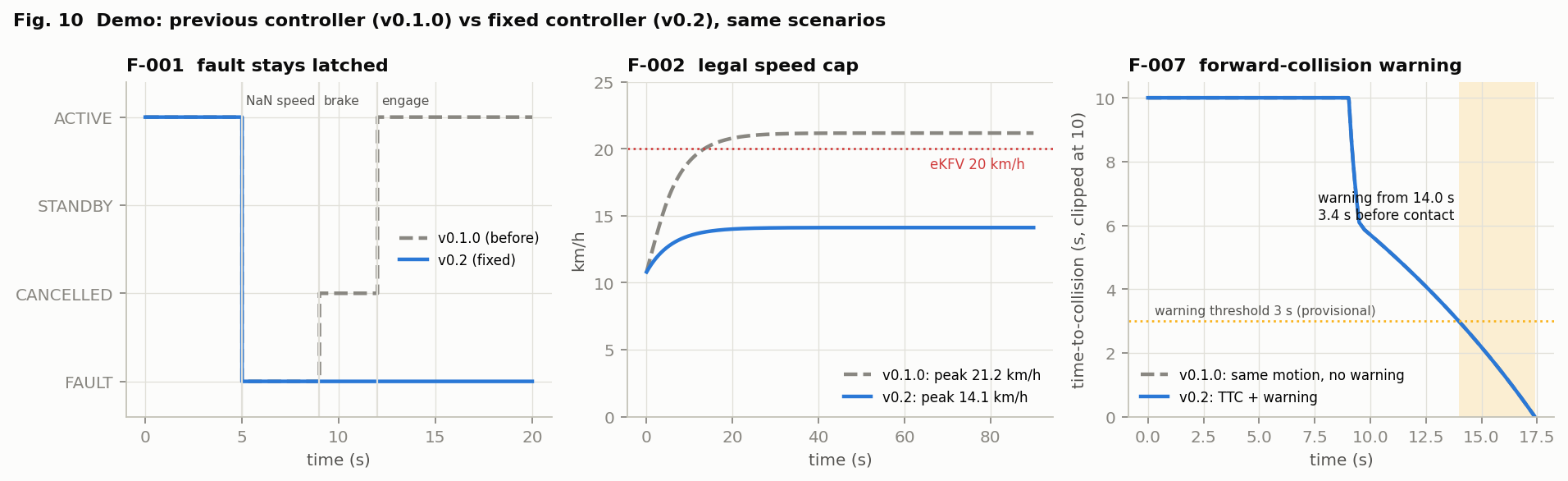
| Sensor fault, then rider presses brake and engage | Accelerates again | Stays in safe fault mode |
| Set speed 30 km/h on an open road | Reaches 21.2 km/h | Stays below 20 km/h |
| Vehicle ahead brakes hard | No warning | Warning 3.4 s before contact |
| Sensor data goes stale | Motor power cut | Motor power cut at 10.14 s |
Simulation with an illustrative vehicle model, not a real-world stopping test. 25 of 25 tests pass in continuous integration on Python 3.11.
Gallery
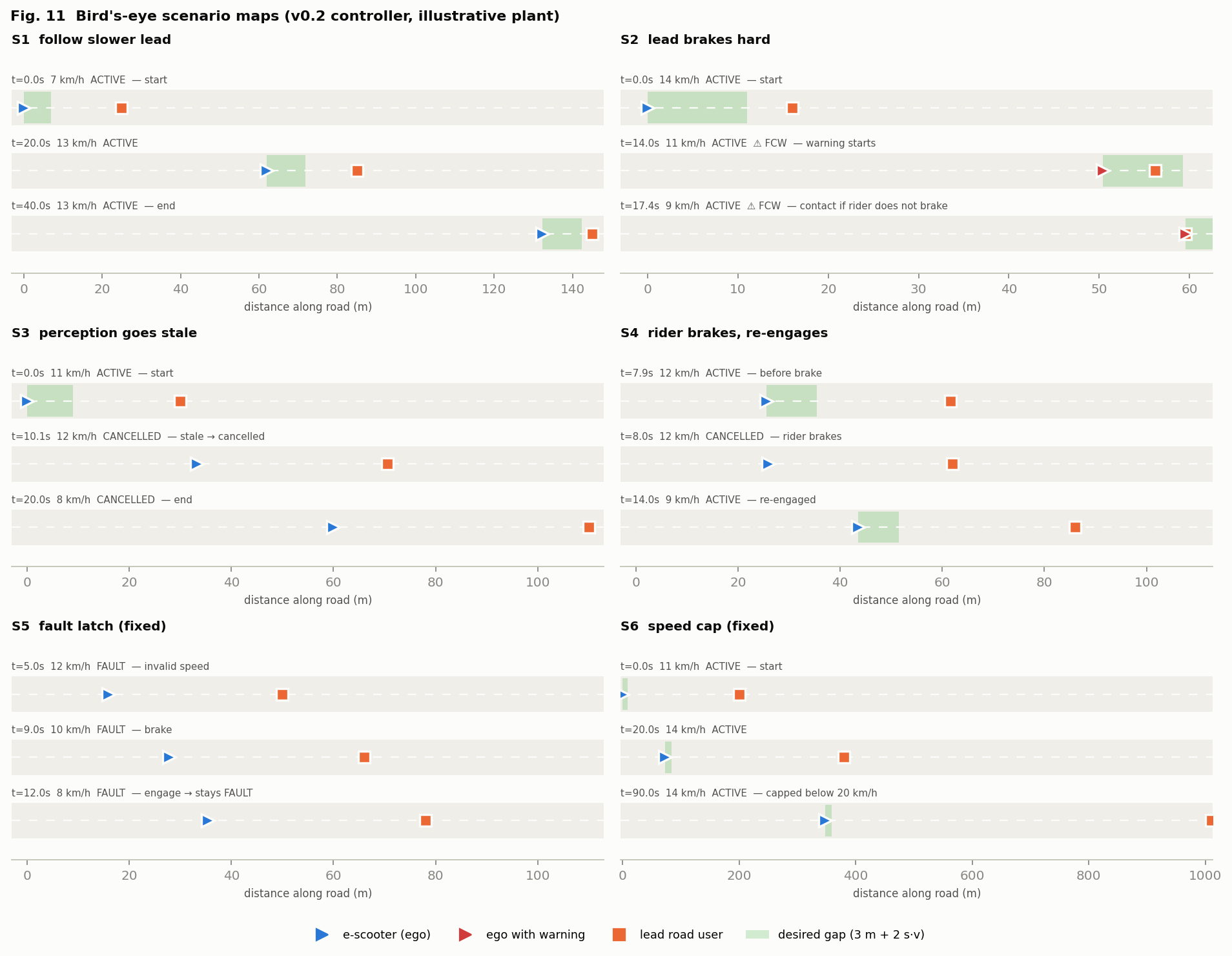
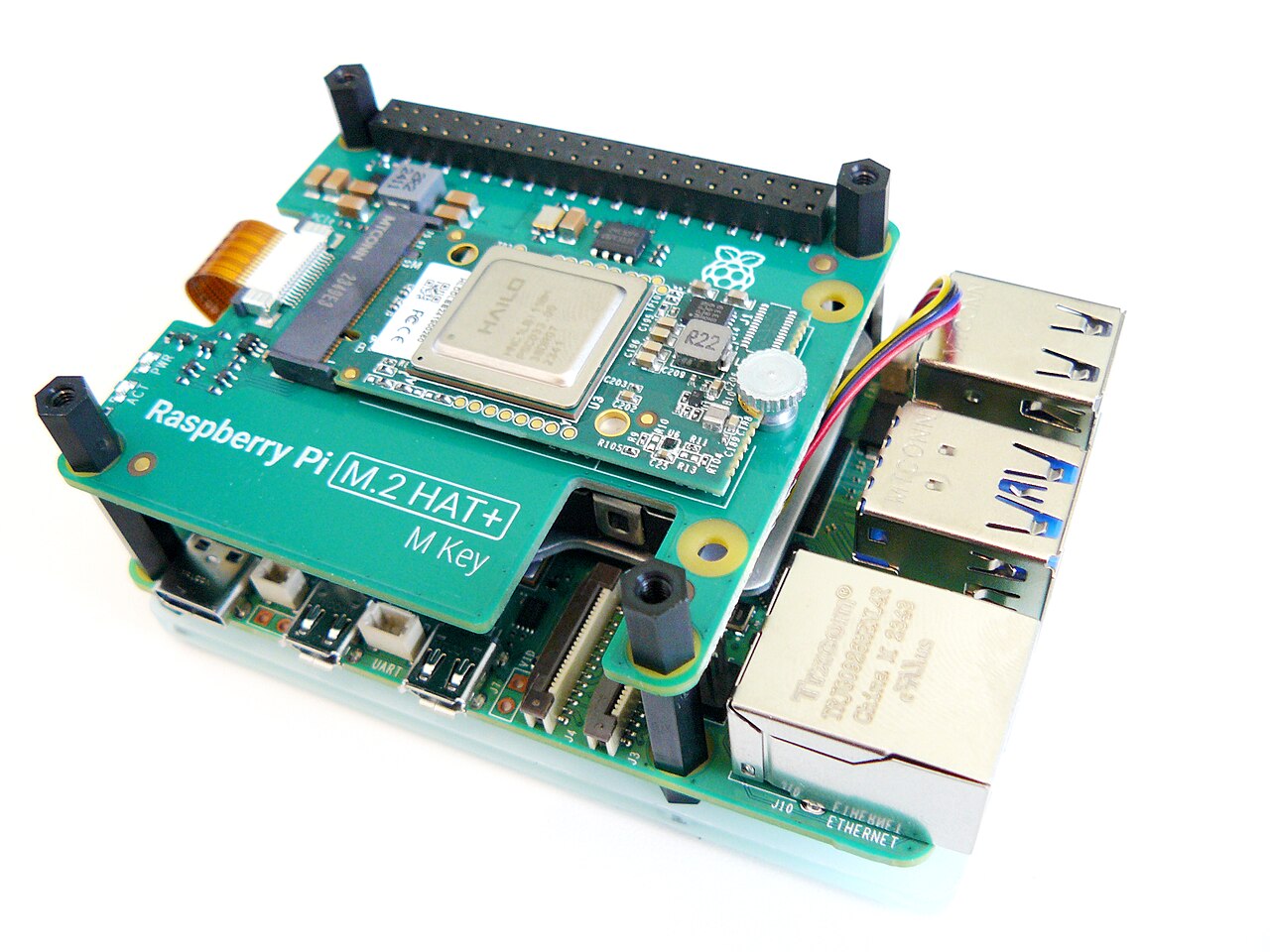
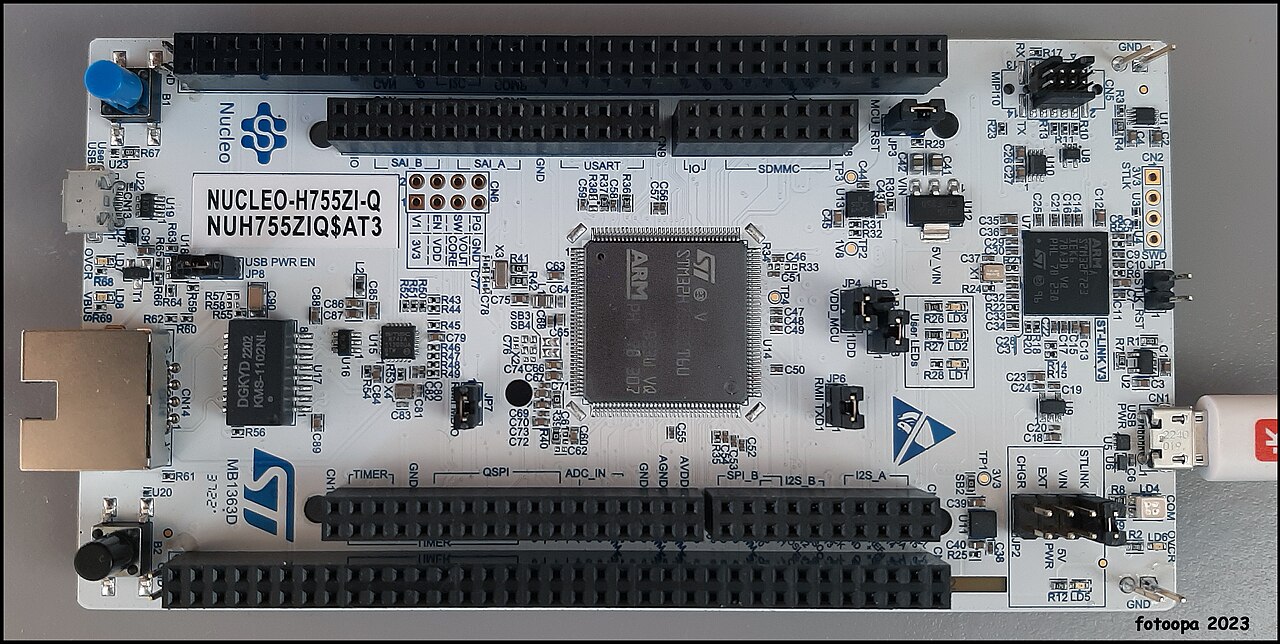
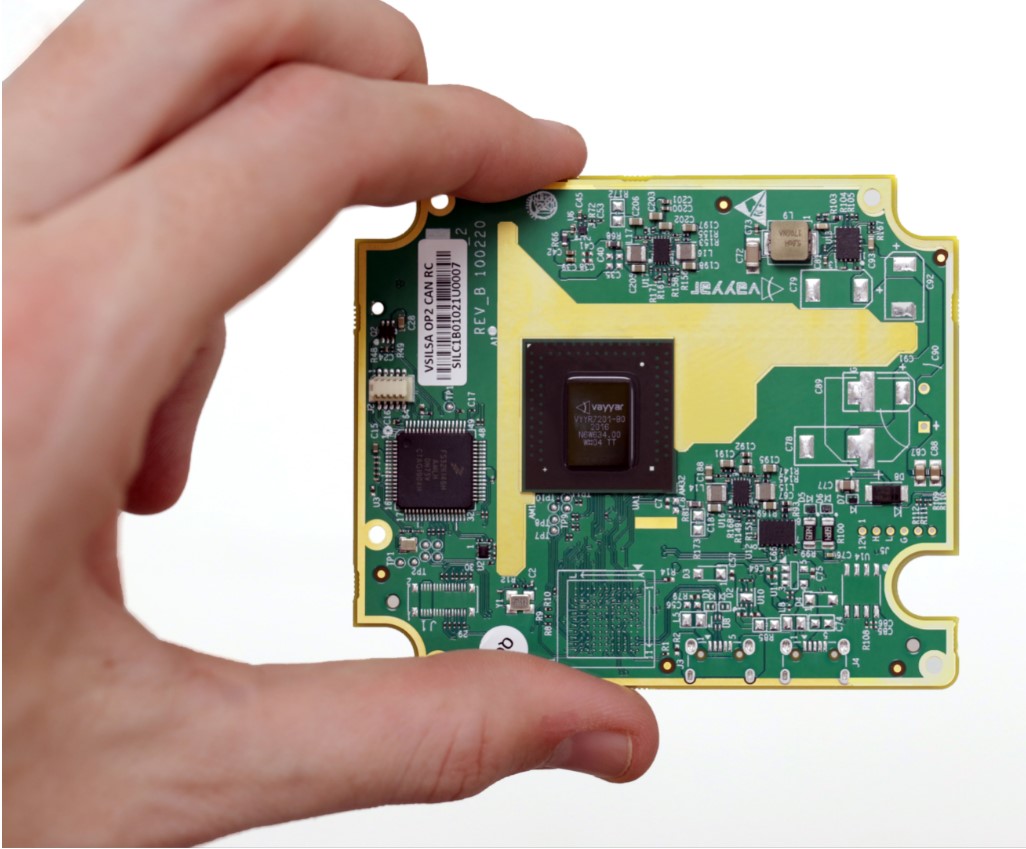
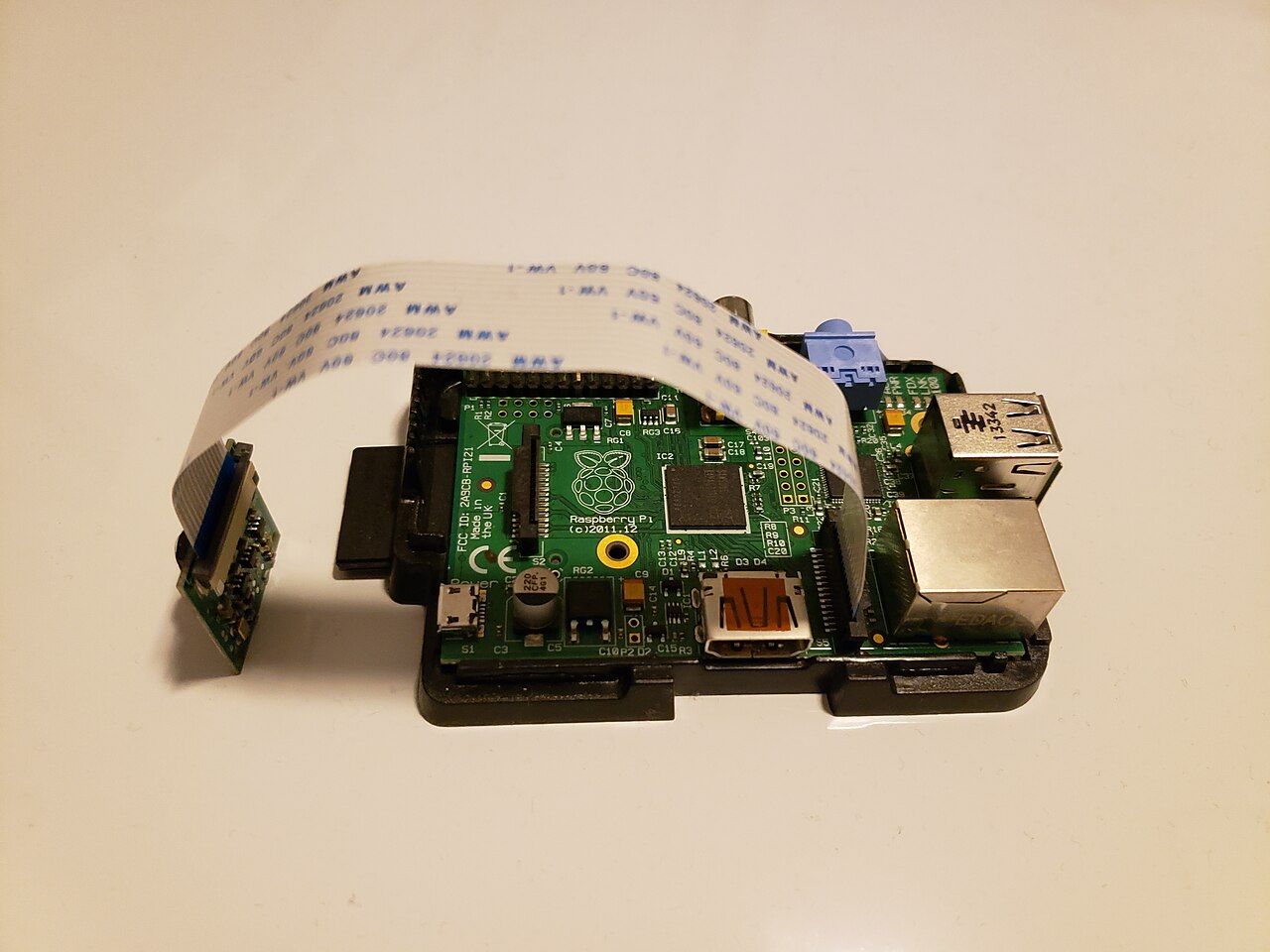
A ride through a small town driven by our real controller, the simulation results behind this exposé, and the hardware components the design is built on.
Ride through a small town
Map key: blue dot = e-scooter (yellow ring while warning) · dark box = car · grey dot = cyclist · dashed line = tracked gap · traffic light at the stop line.
Simulation only. The real controller (v0.2) runs at 50 Hz on an illustrative vehicle model. The cyclist, car, traffic light and rider reactions are scripted: the rider brakes 1.0 s after the warning and re-engages when it is safe. Top speed stays near 14 km/h because of the simple vehicle model, not the 20 km/h cap.
Found while building this demo (F-008): with no road user ahead at all, v0.2 treats the missing target as untrusted perception and cancels ACC instead of cruising at the set speed. The ride above always has a cyclist or car ahead. Fixing this is a new task for the team.
Simulation results
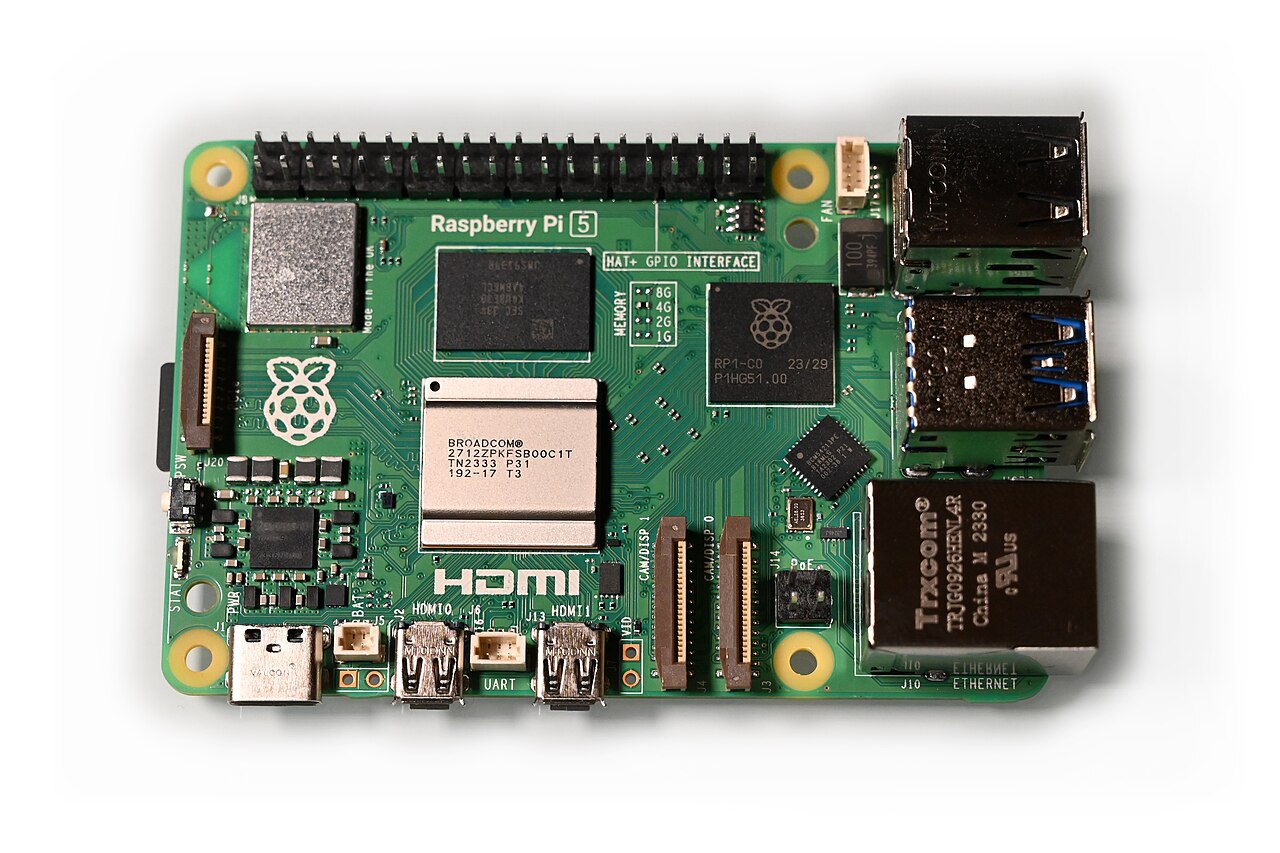
Hardware the design is built on
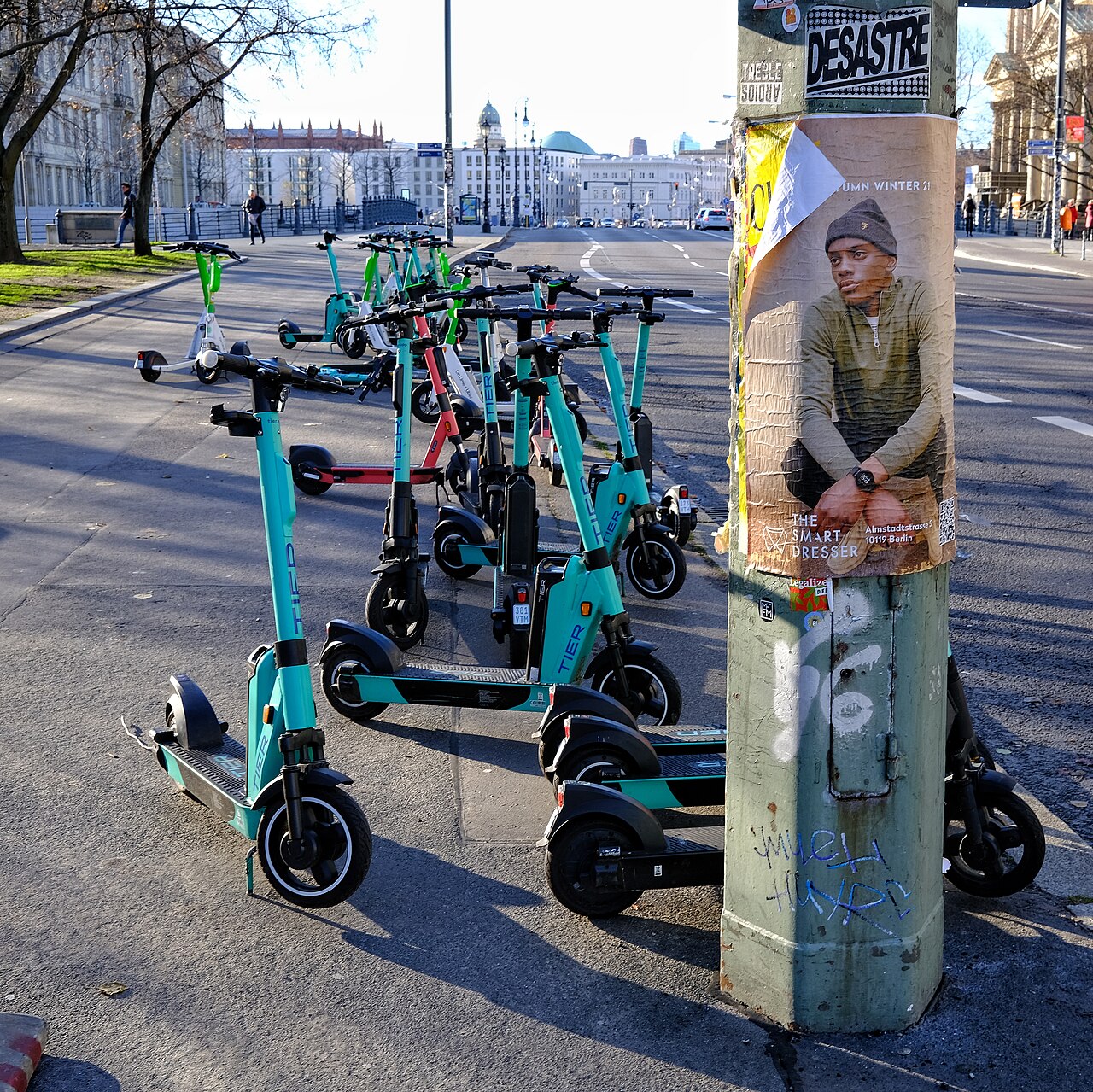
Photos of the component types in our design, from Wikimedia Commons under free licences. These are not photos of our prototype, which does not exist in hardware yet.






Where we fit
Others warn about what is behind the rider, hold a set speed, or catch riders on the sidewalk. None of the products we reviewed documents keeping the gap ahead on a standing kick scooter.
Why now
- Accidents are rising fast, and cities and insurers want them down.
- Edge AI has become efficient: a 2026 benchmark measured Hailo-8 as the most energy-efficient accelerator for large YOLO models on a Raspberry Pi 5.
- Chinese makers have industrialised two-wheeler radar on e-bikes since 2024, so components exist at scale.
- Sharing operators already pay for camera-based rider safety.
Market size, handled with care
Commercial reports put micromobility in 2025 anywhere between USD 42 bn and 198 bn, and e-scooters alone at USD 47.4 bn. These numbers disagree by a factor of 4.7, so we use them as context only. The business case below is built bottom-up from units and prices you can change.
Sources: Segway press release (CES 2026); NIU Q4 2023 earnings call; The Paper, 14 Mar 2025; TechCrunch, 13 Jul 2022; Suchý & Turčaník, Sci. Rep. 2026; IMARC and Grand View Research listings, accessed 17 Oct 2026.
Commercial products we compared
Three products, checked against their official product pages on 17 October 2026. Each card lists what the page states; anything the page does not mention is marked as not documented, which is not proof that the feature is missing.
Segway Ninebot F3 Pro D
- Type
- Standing e-kick-scooter, about 20 km/h, 500 W rated, German insurance plate: yes
- Stated
- SegRide Intelligent Riding Assist (real-time support by detecting the road and riding behaviour), uphill acceleration and downhill deceleration assistants, traction control (off by default), stability system
- Not documented
- Cruise control, radar, camera, forward obstacle detection, distance keeping
Riding assistance on a standing scooter. No forward radar-based distance keeping documented.
de-de.segway.com · F3 Pro D, verified 17 Oct 2026
NIU NQiX 300
- Type
- Seated electric moped (L3e), up to 80 km/h. Not a standing scooter
- Stated
- Rear blind-spot detection that warns of approaching traffic (new for 2026), ABS, traction control, auto-hold on slopes, reverse assist
- Not documented
- Camera, forward collision warning, cruise control, adaptive cruise control
Radar-based rear warning on a seated moped. Rear blind-spot warning is not forward ACC.
global.niu.com · NQiX 300, verified 17 Oct 2026
LAMAX S7500 Plus
- Type
- Standing e-kick-scooter, 25 km/h, 350 W (600 W peak); page states legal operation in the Czech Republic and Slovakia
- Stated
- Automatic cruise control: after ten seconds above the set speed it holds the speed so the throttle can be released; can be switched off in the app
- Not documented
- Obstacle detection, distance monitoring, radar, camera, collision warning
Conventional speed-holding cruise control. Not adaptive cruise control.
lamax-electronics.com · S7500 Plus, verified 17 Oct 2026
Research that came before us
Collision Avoidance Safety Filter for an Autonomous E-Scooter using Ultrasonic Sensors
R. Strässer, M. Seidel, F. Brändle, D. Meister, R. Soloperto, D. Hambach Ferrer and F. Allgöwer. 17th IFAC Symposium on Control in Transportation Systems (CTS 2024); IFAC-PapersOnLine 58(10), 22–28, 2024. arXiv:2403.15116, submitted 22 March 2024.
Several low-cost ultrasonic sensors detect obstacles in front of an autonomous e-scooter. A filter handles measurement noise and missing values, and a gain-scheduled controller limits the commanded velocity to a reduced safe value that keeps a sufficient safety distance. The approach was validated in real-world experiments.
arxiv.org/abs/2403.15116, checked 17 Oct 2026
How our concept differs
- Their vehicle drives autonomously and the filter limits its own commanded speed. Ours keeps a human rider in charge: the system only withholds extra motor power and warns.
- They sense with ultrasonic sensors at short range. We plan forward FMCW radar plus camera detection, for longer range and object classification.
- They validated on real hardware. We are at the simulation stage.
Forward collision avoidance and speed reduction on e-scooters have already been studied. Our contribution is the rider-in-command combination, not the idea of collision avoidance itself.
Capability comparison
| Capability | Segway F3 Pro D | NIU NQiX 300 | LAMAX S7500 Plus | Academic research (Strässer et al. 2024) | Scooter ACC Drive Assist |
|---|---|---|---|---|---|
| Standing scooter platform | Confirmed | No, seated moped | Confirmed | Research prototype autonomous e-scooter | Planned target platform |
| Forward obstacle detection | Not documented | Not documented | Not documented | Hardware validated ultrasonic | Planned sensors · logic Simulation validated |
| Radar sensing | Not documented | Confirmed rear blind spot | Not documented | No, ultrasonic | Planned forward FMCW |
| Camera-based object detection | Not documented | Not documented | Not documented | Not documented | Planned |
| Radar–camera sensor fusion | Not documented | Not documented | Not documented | Not documented | Planned |
| Conventional cruise control | Not documented | Not documented | Confirmed speed holding | Not applicable autonomous vehicle | Simulation validated set-speed tracking |
| Adaptive distance keeping | Not documented | Not documented | Not documented | Hardware validated safe velocity for safety distance | Simulation validated |
| Forward collision warning | Not documented | Not documented (rear warning only) | Not documented | Not documented | Simulation validated REQ-014 |
| Motor torque or propulsion limitation | Confirmed slope assistants, traction control (not distance-based) | Confirmed traction control (not distance-based) | Not documented | Hardware validated velocity limit | Simulation validated distance- and speed-based |
| Independent safety microcontroller | Not documented | Not documented | Not documented | Not documented | Planned STM32G474 |
| Offline edge AI | Not documented | Not documented | Not documented | Not documented | Planned Pi 5 + AI HAT+ |
| Hardware validation status | Confirmed series product | Confirmed series product | Confirmed series product | Hardware validated real-world experiments | Simulation validated no hardware yet |
Scroll the table sideways on small screens. "Confirmed" for a product means stated on its official page on 17 Oct 2026, not independently tested by us.
Technology gap: forward distance assistance for standing e-scooters
Standing scooters already offer cruise control and intelligent riding assistance. Other electric two-wheelers use radar for warnings. Researchers have explored obstacle avoidance and safety filters on e-scooters.
The sources we reviewed do not yet show a commercially available standing scooter that combines all six capabilities on the right. This is a preliminary research observation, not proof of market exclusivity.
- Forward radar sensing
- Camera-based object detection
- Radar–camera sensor fusion
- Adaptive forward distance assistance
- Independent safety supervision
- Offline edge processing
Our proposed architecture
Status per layer: the decision and safety logic is Simulation validated; all hardware is Planned. Nothing below is hardware validated yet.
Perception
- Forward FMCW radar
- Camera
- IMU
- Wheel speed encoder
- GNSS
AI and decision
- Raspberry Pi 5 + edge AI accelerator
- Object detection
- Sensor fusion
- Relative distance and speed
- Time-to-collision estimation
Safety
- Independent STM32 safety controller
- Brake priority
- Watchdog supervision
- Fault detection and latch
- Motor torque limitation
- Fail-safe behaviour
Control philosophy
- No automatic braking in the current scope
- The rider keeps braking responsibility
- Progressive propulsion limitation, only where validated as safe
- Forward collision warnings
Regulation and prior art
Engineering disclaimer. This is an R&D prototype concept. Compliance, functional safety and road legality have not been demonstrated.
Germany (eKFV). E-scooters need a design speed above 6 and up to 20 km/h, an operating permit (ABE) or individual permit, and a valid insurance plate (eKFV §1 and §2). Adding sensors and propulsion control to an approved scooter may affect its permit; this needs assessment with a technical service.
EN 17128:2020. The European standard for personal light electric vehicles up to 25 km/h. It is not tied to a specific EU law, and countries including Germany apply their own national rules. Its test methods are relevant to our validation plan; class definitions are taken from secondary summaries and must be checked against the standard text.
gesetze-im-internet.de/ekfv, checked 17 Oct 2026
Prior-art search still to do
We make no claim of patentability or freedom to operate. A dedicated search is recommended before any filing or product decision:
- Google Patents
- Espacenet (European Patent Office)
- WIPO PATENTSCOPE
- IEEE Xplore
- Google Scholar
Help build the next generation of scooter safety
We are looking for contributors who want to take this from simulation to a working prototype. Useful experience:
Sign in to GitHub and submit the short form. Every request is reviewed by the project owner.
Business model
We start where safety already has a budget: shared fleets in the EU. Germany first, because its rules are clear and strict.
Sharing operators
A retrofit kit plus a yearly software and data service. Fewer crashes and less damage, proof of speed compliance for city permits.
first customersScooter makers
License the controller, safety-chip logic and test evidence. The maker builds the hardware at volume, often in China.
scaleInsurers and cities
Anonymised warning and near-miss statistics for risk pricing and hot-spot maps. No raw video leaves the scooter.
laterGetting into the EU market
| Requirement | What applies | Our status |
|---|---|---|
| Vehicle rules, Germany | eKFV: 6–20 km/h, operating permit (ABE) and insurance plate | 20 km/h cap done in software. Permit impact to assess. |
| Radio and CE | Radio Equipment Directive 2014/53/EU for the radar | Module selection |
| Battery | Regulation (EU) 2023/1542, battery passport from Feb 2027 | Scooter maker's duty |
| Camera data | GDPR (EU) 2016/679 | Processing on the device, no raw video stored by default |
| Product law | GPSR 2023/988, Product Liability Directive 2024/2853, AI Act 2024/1689 | Legal assessment before road tests |
China supplies technology and partners, not customers: kick scooters are banned from public roads in Beijing and other major cities (Beijing rules reaffirmed from 1 May 2026).
Profit model
A scenario, not a forecast. Move the sliders to test your own assumptions. Every default is a placeholder until supplier quotes and operator interviews replace it.
Impact
The goal is fewer injuries without taking control away from the person on the scooter.
Safety
Distance keeping and early warnings address speed and reaction errors in dense traffic. The real effect has to be measured in a pilot with a control fleet. We will not claim a crash reduction before that.
Rider authority
No automatic braking, because a standing rider can lose balance. The system only withholds extra power and warns. Brake and cancel always win.
Young riders
More than half of injured riders are under 25. A speed cap and early warnings help the least experienced riders most.
Privacy
Images are processed on the scooter. Only object lists and statistics leave it, so city and insurer data contain no faces.
Scope and the road to production
Each stage ends at a gate with evidence. We are at stage one.
In scope now
Control logic, simulation, safety requirements and tests, sensor-data replay, bench test with an emulated motor, offline model training.
Out of scope now
Real motor commands, automatic braking, public-road tests and certification. These need a documented safety review first.
Engineering challenge: can you build it better?
Our architecture is a reference implementation, not the required solution. If you can meet the same requirements with simpler, safer or cheaper hardware, algorithms or software, we want to hear it.
Fixed
Standing e-scooter, forward obstacle detection, adaptive motor power limit, at most 20 km/h commanded speed, early collision warning. No automatic braking: the rider brakes.
Open
Sensors, processors, algorithms and software architecture. One chip instead of two? Radar only? Tell us how and how you would prove it.
How
Answer three short questions and share your idea on GitHub. If you like, an AI model on your own computer helps turn it into a full engineering proposal. The project owner reviews every proposal.